15 Low-Maintenance Garden Ideas for a Beautiful, Easy-Care Yard
The weekend finally arrives, but instead of relaxing, you find yourself mowing, watering, pulling weeds, and trimming plants. If your garden feels like a second job, the answer is not to work harder—it is to design a space that requires less work.
These 15 low-maintenance garden ideas can help reduce watering, weeding, mowing, and seasonal replanting while keeping your yard welcoming and beautiful. You will find practical options for different budgets, garden sizes, and experience levels.
Start with one small area instead of redesigning the entire yard. A finished, well-planned garden bed is easier to enjoy and maintain than several half-completed projects.
What Makes a Garden Low Maintenance?
A low-maintenance garden begins with smart planning. Before buying plants or materials, consider these five essential factors:
- Choose plants suited to your climate. Plants that match your local temperatures, rainfall, and growing conditions are more likely to thrive with less attention. In the United States, use the USDA Plant Hardiness Zone Map to find plants suited to your area.
- Understand your soil and drainage. Some plants prefer dry, fast-draining soil, while others tolerate heavier or consistently moist ground. Matching each plant to the right soil helps reduce watering, disease, and replacement costs.
- Make watering easier. Drip irrigation and soaker hoses deliver water slowly near plant roots, reducing runoff and evaporation. According to EPA WaterSense, microirrigation systems can use 20% to 50% less water than conventional sprinkler systems.
- Cover exposed soil with mulch. A 2-to-4-inch layer of organic mulch can help conserve moisture, suppress weeds, and moderate soil temperature. Keep mulch away from plant stems and tree trunks to reduce the risk of rot and pests. University of Minnesota Extension
- Plan for the mature size of every plant. Check how tall and wide each plant will become before planting. Proper spacing improves airflow and helps prevent frequent pruning, overcrowding, and future transplanting.
Native plants can also be a practical choice when they are matched to the specific conditions of your yard. Once established, many native species require less supplemental watering and seasonal care while supporting local pollinators and wildlife. However, even native plants need regular watering during their first growing season.
| Idea | Best For | Cost Level | Maintenance Level | Key Consideration |
|---|---|---|---|---|
| Native plant beds | Regional gardens and pollinator-friendly yards | Low | Low after establishment | Match every plant to your climate, soil, and light |
| Mulched garden beds | Borders, trees, shrubs, and vegetable beds | Low | Low | Apply 2–4 inches and keep mulch away from stems |
| Drip irrigation or soaker hoses | Garden beds, raised beds, and containers | Low to moderate | Low after installation | Use a timer and drain lines before freezing weather |
| Drought-tolerant planting | Sunny areas with well-drained soil | Low to moderate | Low after establishment | New plants still require regular watering |
| Ground covers | Slopes, spaces under trees, and pathway edges | Low to moderate | Low after plants fill in | Avoid species considered invasive in your region |
| Container gardens | Patios, balconies, entrances, and rentals | Low to moderate | Moderate | Use containers with drainage holes and quality potting mix |
| Raised garden beds | Vegetables, herbs, poor soil, and small yards | Moderate | Low to moderate | Keep beds no wider than 4 feet for easy access |
| Perennial plantings | Mixed borders and seasonal flower beds | Moderate upfront | Low seasonal care | Check mature size, sunlight needs, and hardiness zone |
| Gravel or permeable pathways | High-traffic routes and garden edges | Moderate | Low | Install proper edging and expect occasional weeding |
| Simple garden zoning | Gardens of every size | Free to low | Can reduce overall maintenance | Give each area one clear purpose |
| Clover or low-mow lawn blend | Suitable sunny or partly shaded lawn areas | Low | Low to moderate | Check local climate, HOA rules, and municipal regulations |
| Clumping ornamental grasses | Sunny beds, borders, and slopes | Low to moderate | Low seasonal care | Choose non-invasive clumping varieties suited to your area |
| Evergreen foundation beds | Garden beds along the house | Moderate | Low | Leave enough space for mature growth and airflow |
| Hardscape-first garden corner | Patios, seating areas, and rental-friendly spaces | Moderate to high | Low | Balance hard surfaces with plants and proper drainage |
| Crisp garden-bed edging | Lawns and garden borders | Low | Low seasonal care | Refresh natural edges once or twice each year |
15 Low-Maintenance Garden Ideas
1. Start With Native Plants Adapted to Your Region
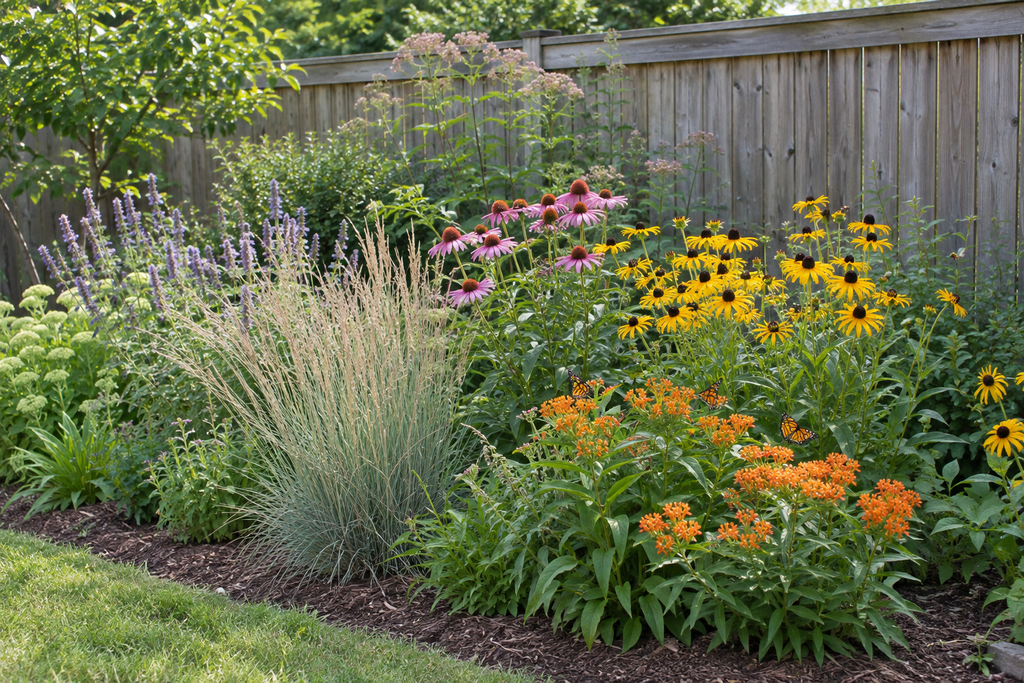
Native plants have adapted to the climate, rainfall, soil, and wildlife of their region. When selected for the specific conditions in your yard, many native species require less supplemental watering, fertilizer, and seasonal care once established. They can also provide valuable food and shelter for local pollinators and birds.
Before choosing plants, check your USDA Plant Hardiness Zone and observe how much sunlight the planting area receives. Then use a trusted regional resource, local extension office, or the Audubon Native Plants Database to identify suitable species for your location.
Plant during the recommended season for your region, leave enough space for each plant’s mature size, and water consistently throughout the first growing season. Native does not mean maintenance-free from the first day; young plants still need time and care to establish strong roots.
A small starter bed may cost approximately $30 to $90, depending on plant size, quantity, and local prices. To save money, choose plugs or seeds instead of large nursery pots and look for local native-plant sales. Renters and people with limited space can also grow suitable native flowers in containers with drainage holes.
2. Build Mulched Garden Beds
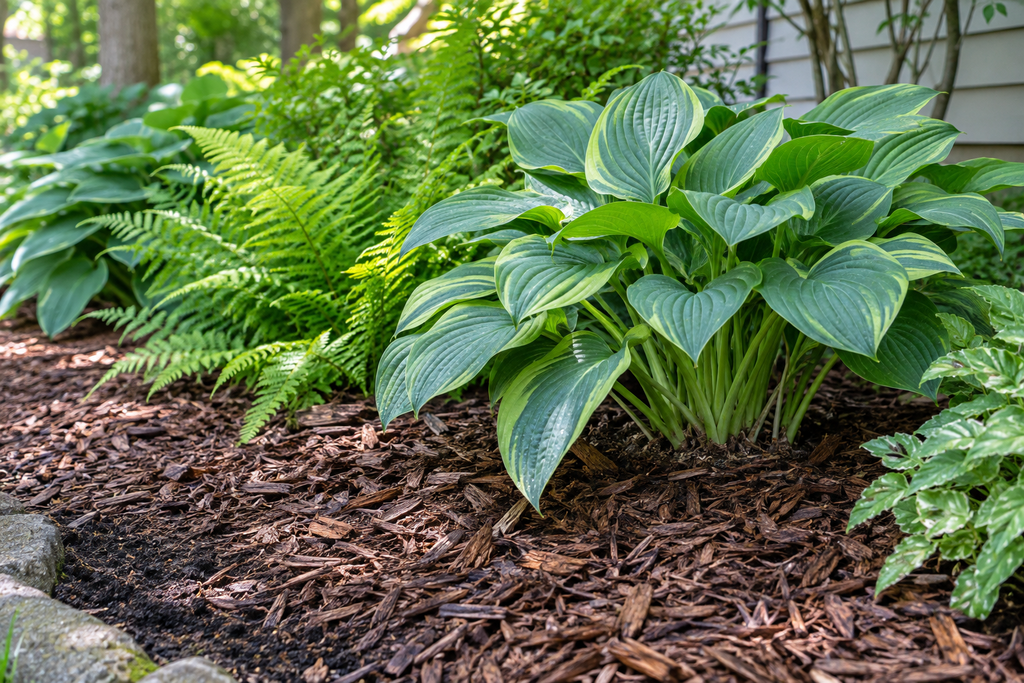
Mulch can reduce two common garden chores at the same time. A 2-to-4-inch layer of organic mulch helps retain soil moisture, suppress weeds, and moderate soil temperature. Shredded bark or wood chips work well around trees, shrubs, and perennial beds, while clean straw can be suitable for vegetable gardens.
Remove existing weeds before spreading the mulch. Apply it evenly, but keep it a few inches away from plant stems and leave space around tree trunks. Piling mulch against trunks or stems can trap moisture and increase the risk of rot, disease, and pest problems.
Check the mulch during the growing season and replenish it when it becomes thin or begins to decompose. The cost for a 100-square-foot bed may range from approximately $30 to $80, depending on the material and local prices.
To reduce the cost, ask local arborists or municipal yard-waste programs whether they offer free wood chips. Avoid using material from diseased trees, and confirm that the mulch is appropriate for residential garden beds.
3. Install Drip Irrigation or Soaker Hoses
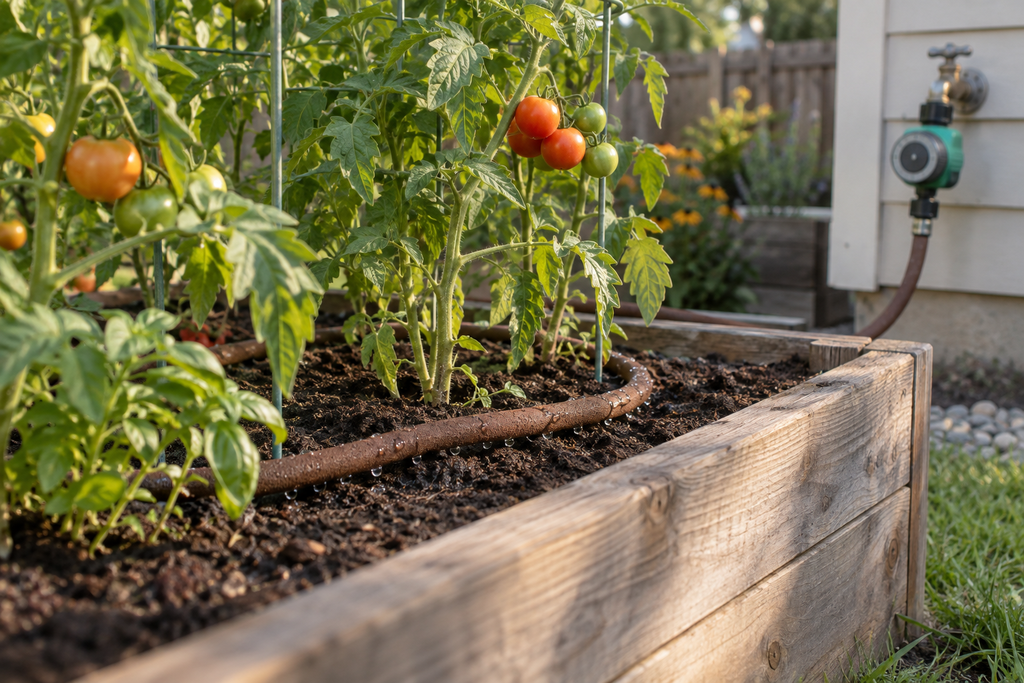
Drip irrigation and soaker hoses deliver water slowly near plant roots, helping reduce runoff and evaporation. According to EPA WaterSense, a properly designed microirrigation system can use 20% to 50% less water than a conventional sprinkler system and may save a typical household more than 25,000 gallons of water each year.
Place the hose along the base of the plants, connect it to an outdoor faucet, and use a timer to control the watering schedule. A thin layer of mulch can be placed over the hose to help protect it and retain moisture. Follow the manufacturer’s instructions and use a pressure regulator when recommended.
Check the system regularly for leaks, clogged sections, and uneven watering. In areas with freezing winters, disconnect and drain the lines before the first hard freeze to help prevent damage.
A simple setup for one garden bed may cost approximately $35 to $80, depending on the hose length, timer, and accessories. Renters can use a removable soaker hose that can be rolled up and stored at the end of the season.
4. Plant Drought-Tolerant Species
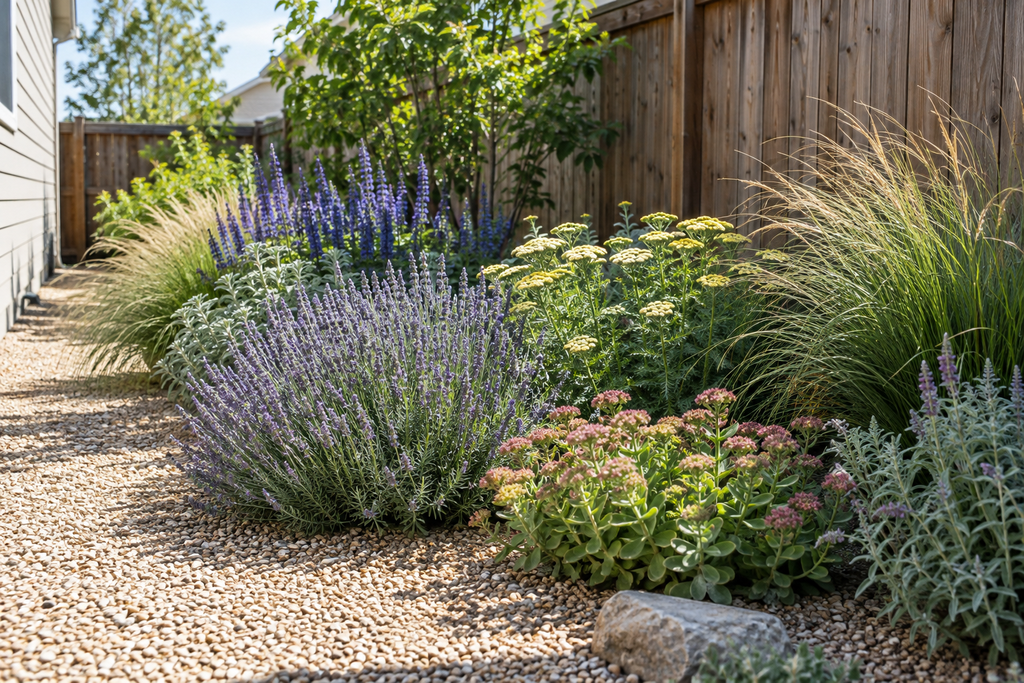
Drought-tolerant plants can reduce the need for frequent watering once their roots are established. Possible choices include lavender, salvia, yarrow, sedum, coneflower, black-eyed Susan, and clumping ornamental grasses. However, each plant must be suitable for your climate, soil, sunlight, and USDA hardiness zone.
Choose a sunny location with well-drained soil and group plants with similar watering needs together. Heavy, waterlogged soil may cause root problems for species that prefer dry conditions. The EPA WaterSense landscaping guide recommends choosing regionally appropriate, low-water plants and matching them to the conditions of the planting site.
Drought-tolerant does not mean that a plant never needs water. New plants require regular watering while their roots become established, especially during their first growing season. Even established plants may need supplemental water during unusually hot or prolonged drought conditions.
The cost is generally similar to other perennial plants, although seeds and small plugs are usually less expensive than mature nursery pots. People with small yards or balconies can also grow suitable drought-tolerant plants in containers with drainage holes.
5. Use Ground Covers Instead of Bare Soil and Grass
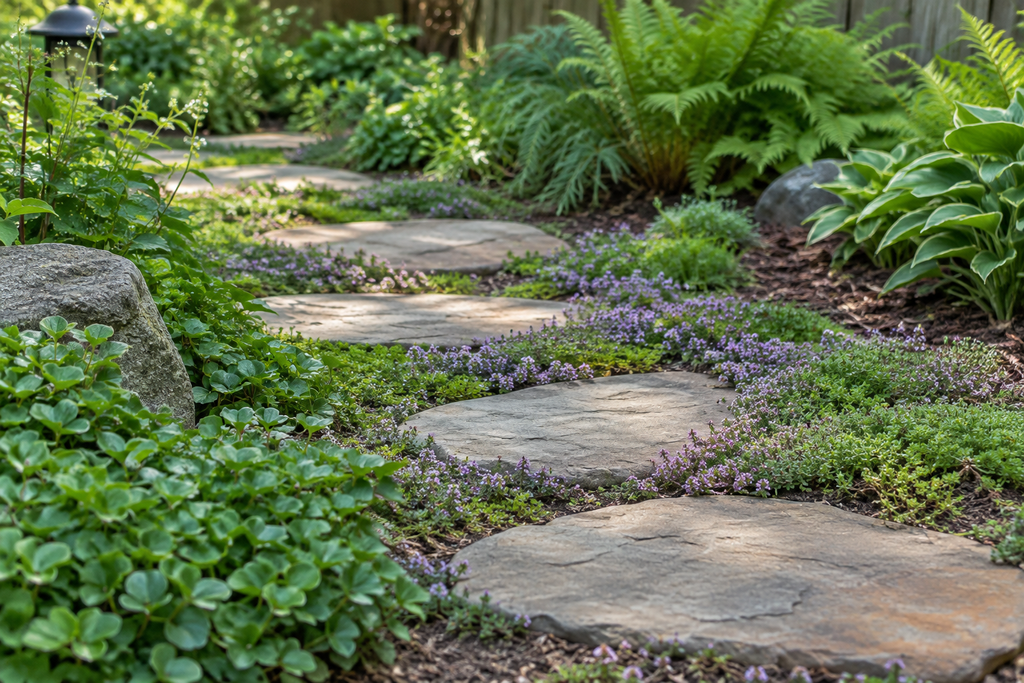
Low-growing ground covers can fill bare patches and replace small areas of lawn that you would otherwise need to mow. Once they spread, their foliage can help reduce weed growth, although you will still need to remove occasional weeds.
Choose plants that suit the spot. Creeping thyme and some sedums can work in sunny, well-drained areas; shaded areas need different plants. Before buying a spreading ground cover, check whether it is considered invasive in your region.
Remove existing weeds before planting, follow the recommended spacing for your chosen species, and mulch between young plants while they fill in. Water new plants during establishment. How quickly they cover the ground depends on the plant, spacing, and growing conditions—do not expect every bed to fill in within one season.
For a small-space project, try planting suitable creeping thyme around stepping stones. Keep the stones as the main walking surface, and choose plants that tolerate occasional foot traffic near the edges.
6. Garden in Containers
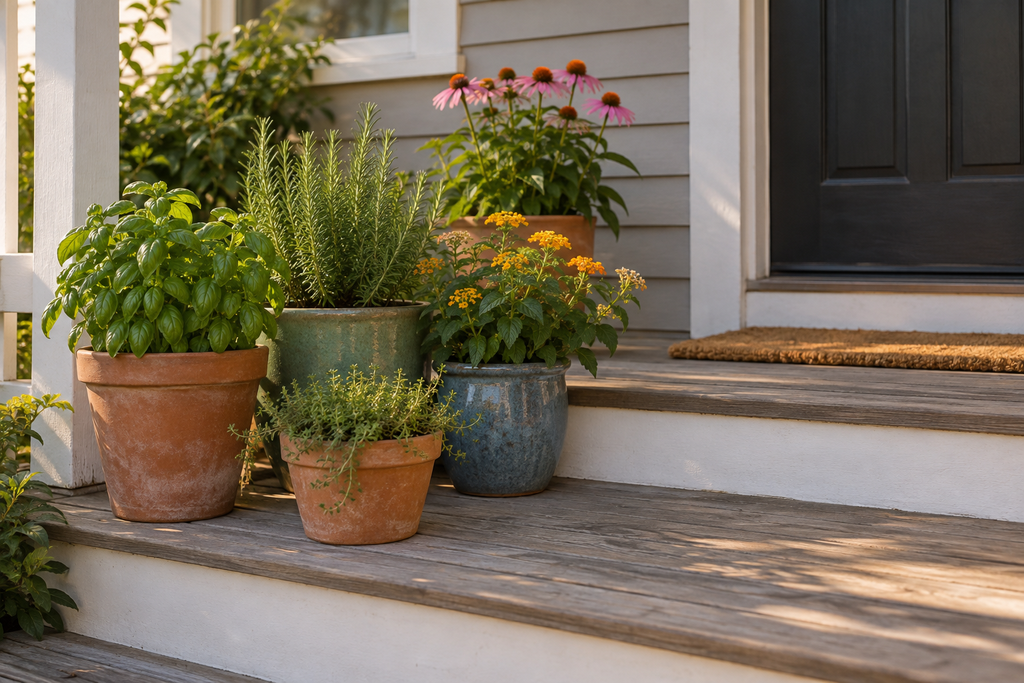
Container gardens work well on patios, balconies, front steps, and in rental spaces where you cannot dig. Pots keep the planting area defined and can be moved when needed, although large pots filled with wet soil may be heavy.
Choose a pot that gives the plant enough room to grow and has drainage holes. Fill it with a lightweight potting mix rather than ordinary garden soil, which can become too dense in a container. Empty any saucer that remains full of water after watering.
Containers still need attention: check the soil regularly, especially during hot, dry weather, when some pots may need water every day. Group plants with similar light and watering needs together to make care easier.
To save money, reuse a suitable container or bucket after adding drainage holes, and start with a few plants instead of filling the whole space at once.
7. Build Raised Garden Beds
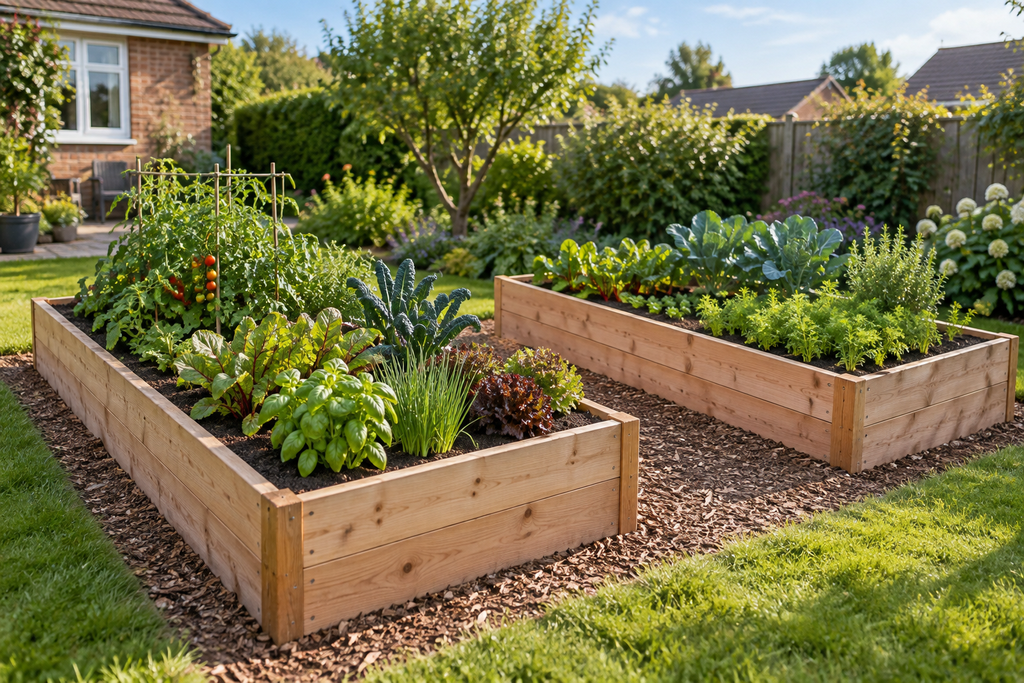
Raised beds give vegetables and herbs a defined place to grow. They are useful in small yards or where the existing soil is compacted, and a bed at a comfortable height can make gardening easier on your back.
Choose a sunny spot and leave a path around each bed. Make the bed narrow enough to reach its center without stepping on the soil; if you can reach it from both sides, about four feet wide is a practical starting point. Fill it with good topsoil mixed with some compost, then mulch the paths to help keep them tidy.
Raised beds still need care. Pull weeds as they appear and check the soil regularly in hot weather, since raised beds can dry out faster than gardens planted in the ground. If you rent, check with your landlord before installing a permanent frame.
8. Choose Perennials Over Annuals
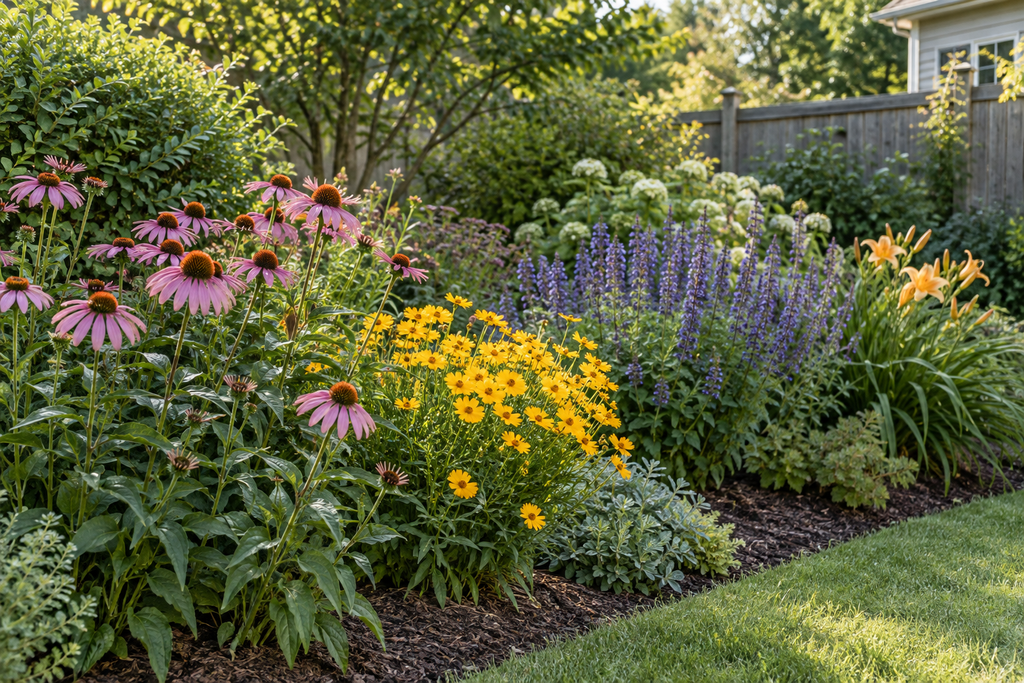
Perennials can return year after year when they are suited to your climate. That means you may not need to buy and replant an entire flower bed each spring. For a colorful border, consider coneflowers, coreopsis, salvia, or daylilies in sunny spots, and hostas where there is suitable shade.
Before buying, check each plant’s hardiness, sunlight needs, and mature size. Mix plants that bloom at different times, and give new plants enough water while they establish. Perennials still need occasional care, such as weeding and cutting back spent growth.
Some established perennials can be divided to fill another part of the garden without buying more plants. Divide a plant when it needs it, rather than assuming every variety needs dividing each year. If pets use the garden, check each plant against the ASPCA plant list before planting.
9. Lay Gravel or Permeable Pathways
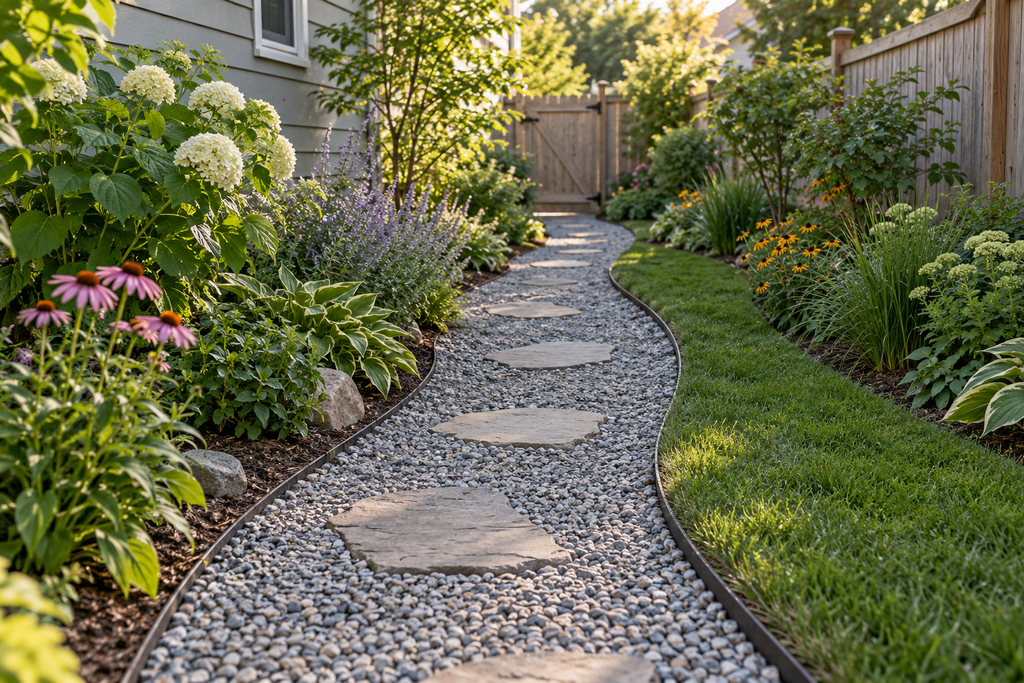
A defined path gives you a clear route through the garden and replaces a small strip of lawn that would otherwise need mowing. Gravel or stepping stones can also make the space between planting beds easier to use after rain.
Mark the route first, then remove the grass and prepare a level, stable base. Add edging to help keep the gravel out of the lawn, and choose a surface that feels comfortable to walk on. Where the ground beneath can absorb water, a properly built permeable path can let some rain soak through instead of running off.
Check the path occasionally for weeds, displaced stones, or gravel that needs topping up. On a steep slope, ask a local landscaper about a suitable base and drainage before laying loose gravel.
10. Zone Your Garden on Paper First
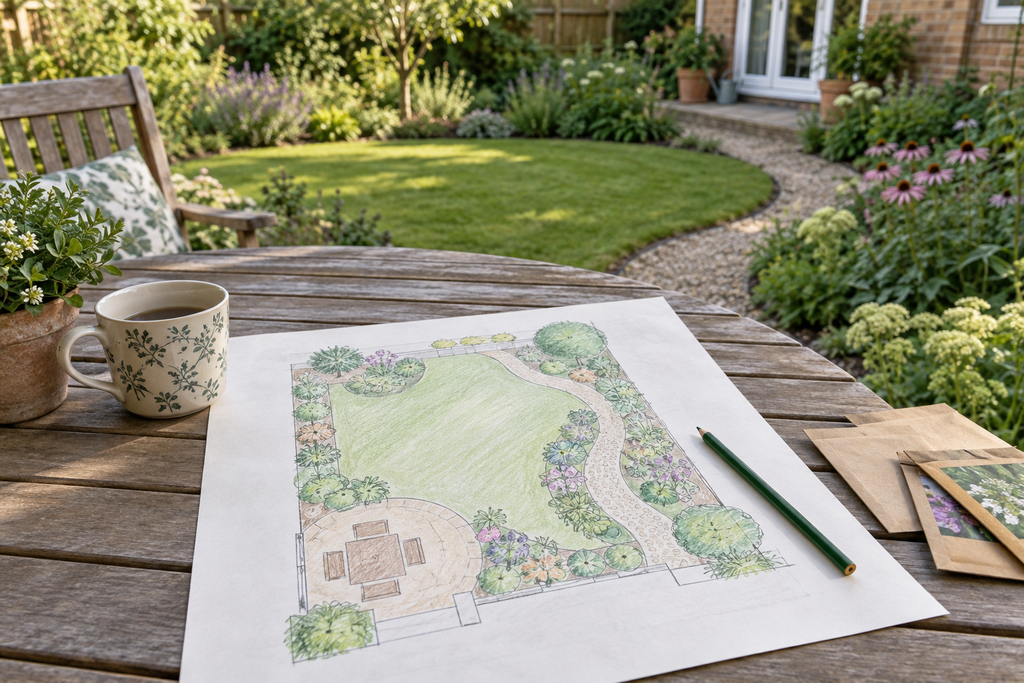
Before buying plants or materials, draw a simple outline of your yard. Mark the sunny and shady areas, the door, the water source, and any paths you already use.
Give each area a purpose: a place to sit, a planting bed, a path, or a small lawn. Put vegetables and containers where you can reach them easily for regular watering. Then start with one area you can finish before moving to the next.
If you rent, you can try the same idea on a patio. Use pots and an outdoor rug to define a sitting area without digging or making permanent changes.
11. Swap Part of the Lawn for a Low-Mow Clover Mix
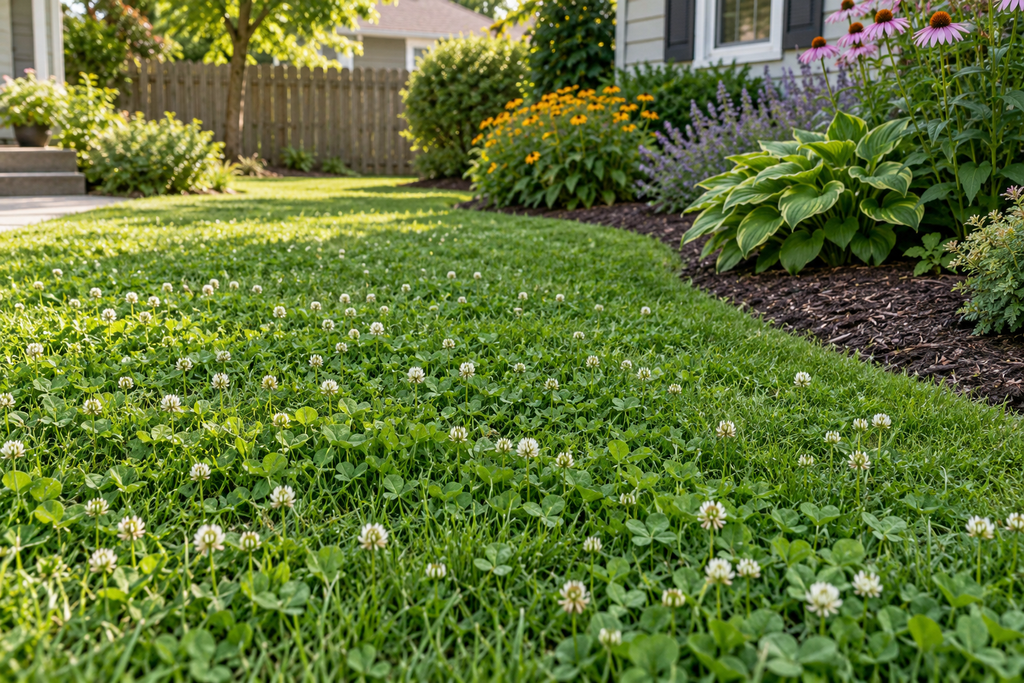
If mowing takes too much of your weekend, try changing one small section of lawn first. A mix of suitable lawn grasses and white clover can stay usable as a lawn while providing flowers for pollinators. It will still need mowing, but an established mix may need it less often.
Choose a spot with enough light and prepare the soil before sowing. If the existing lawn is healthy, you may be able to add seed to it; a badly compacted or weedy patch may need more preparation. Follow the seed supplier’s directions and water new seedlings as they establish.
White clover flowers attract bees, so think about where children walk or play barefoot. Check any local or neighborhood rules before changing your lawn.
12. Add Ornamental Grasses
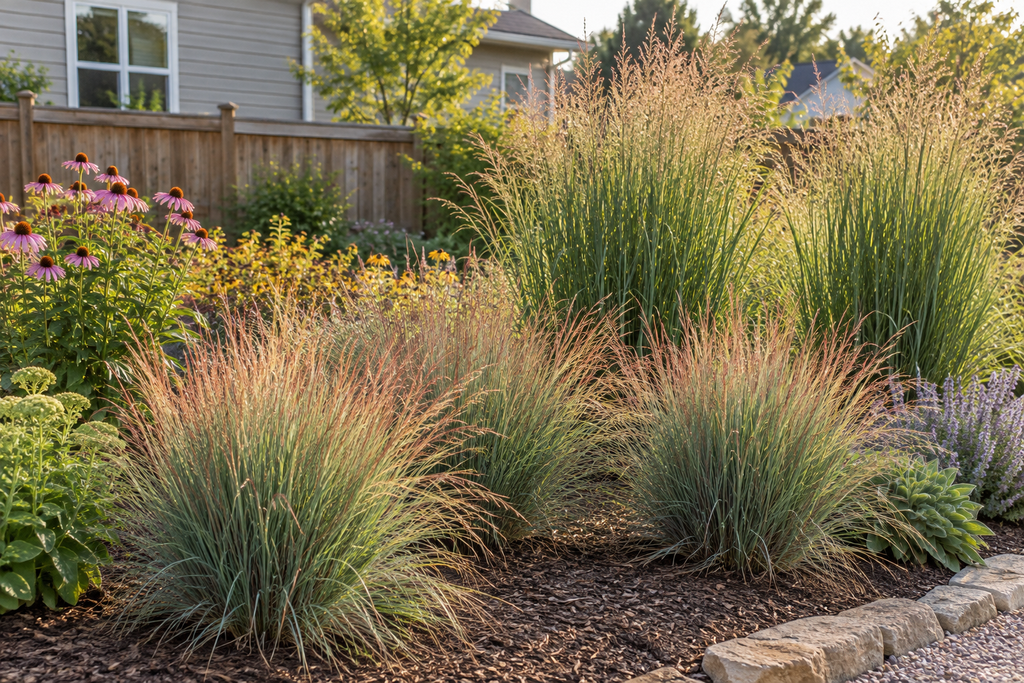
Ornamental grasses add height and movement to a garden bed without needing flower deadheading. Some keep their seed heads through winter, giving the garden structure even after other plants have finished blooming.
For a sunny border, consider clump-forming grasses such as little bluestem or switchgrass if they suit your region and growing conditions. Check the plant’s mature size before buying, and leave enough room for each clump to grow. Avoid varieties that spread aggressively or are considered invasive where you live.
Water new plants while they establish. Later, care depends on the variety and local climate; many dormant grasses can be cut back before new spring growth begins. If a clump becomes crowded, some ornamental grasses can be divided to make another plant.
13. Frame the House with Evergreen Foundation Beds
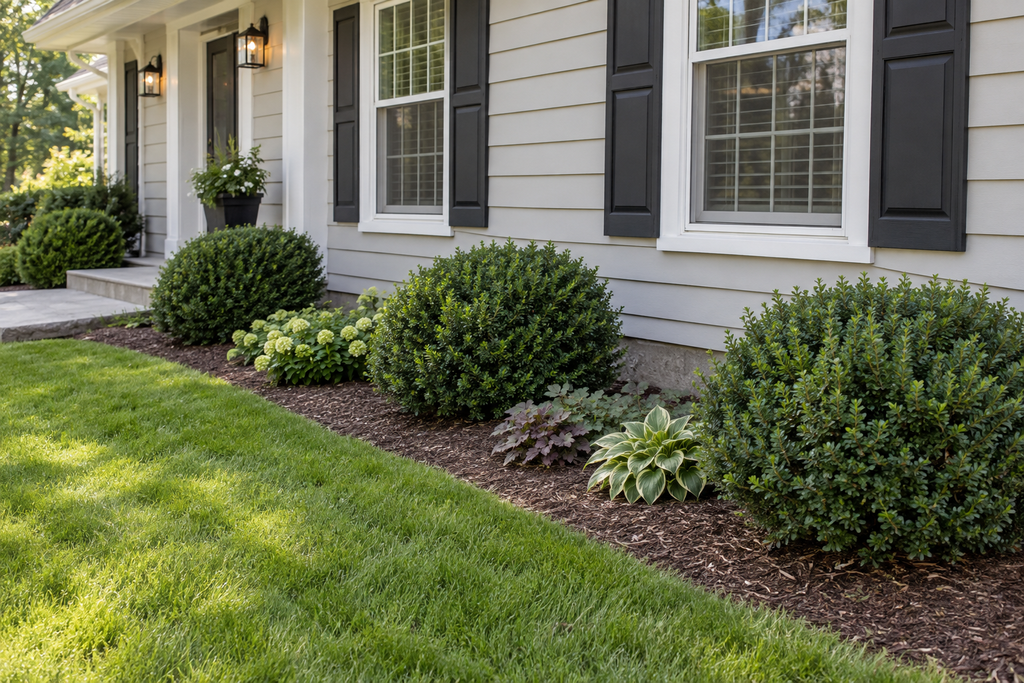
A few well-placed evergreen shrubs can give the front of your home color and structure throughout the year. Choose varieties suited to your climate that will fit the space when fully grown, so you do not have to keep cutting them back to clear a window or walkway.
Before planting, check each shrub’s mature height and width. Leave room between the plants and the house so branches will not press against the siding. Add mulch to the bed, keeping it away from the shrub stems, and water regularly while the new plants establish.
Start with a few shrubs rather than filling every gap immediately. If pets use the yard, check each plant on the ASPCA toxic and non-toxic plant list before buying.
14. Make a Cozy Corner with Gravel and Pavers
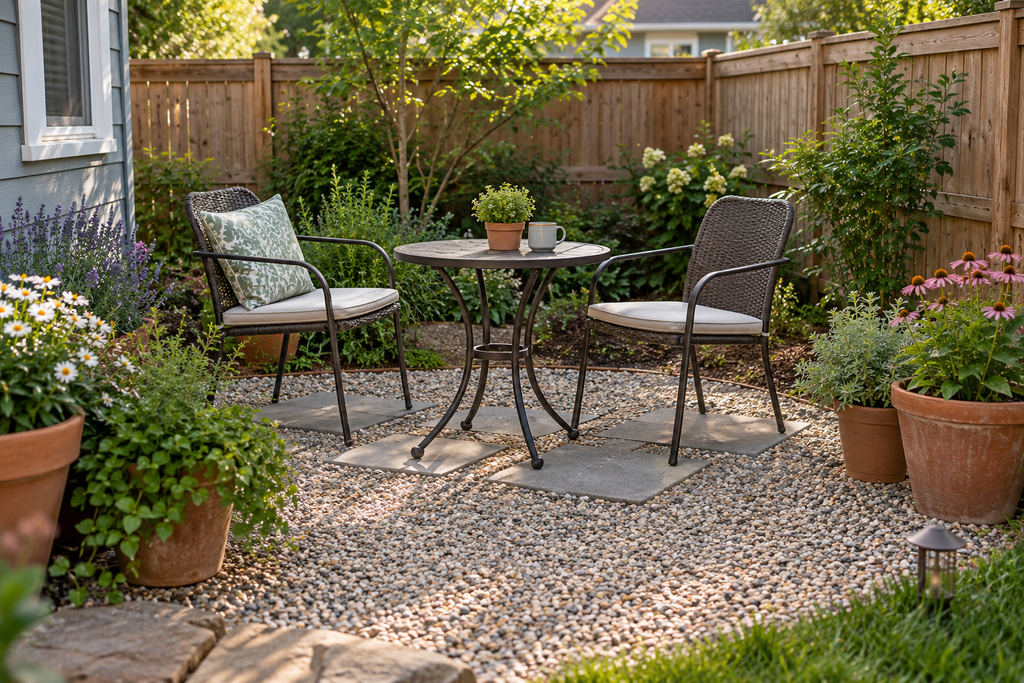
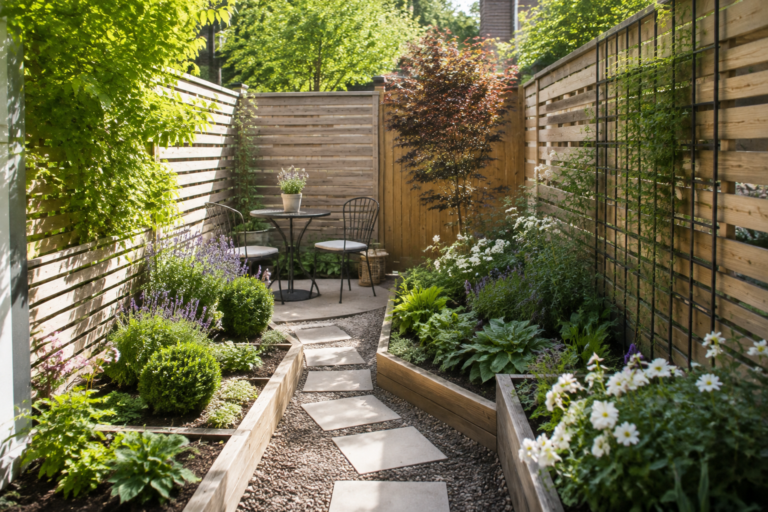
A small seating corner can replace a patch of lawn that needs regular mowing. You do not need to pave the whole yard: a stable surface for two chairs and a table, with a few plants around the edges, can make the space useful and welcoming.
Choose a spot you can reach easily from the house. Plan where rainwater will go, prepare a level base, and use pavers where the chairs need firm footing. Add a few containers for greenery, remembering that plants in pots will still need watering.
If you rent, arrange furniture and pots on an existing patio. An outdoor rug can define the seating area without digging or making a permanent change.
15. Define Garden Beds with Crisp Edging
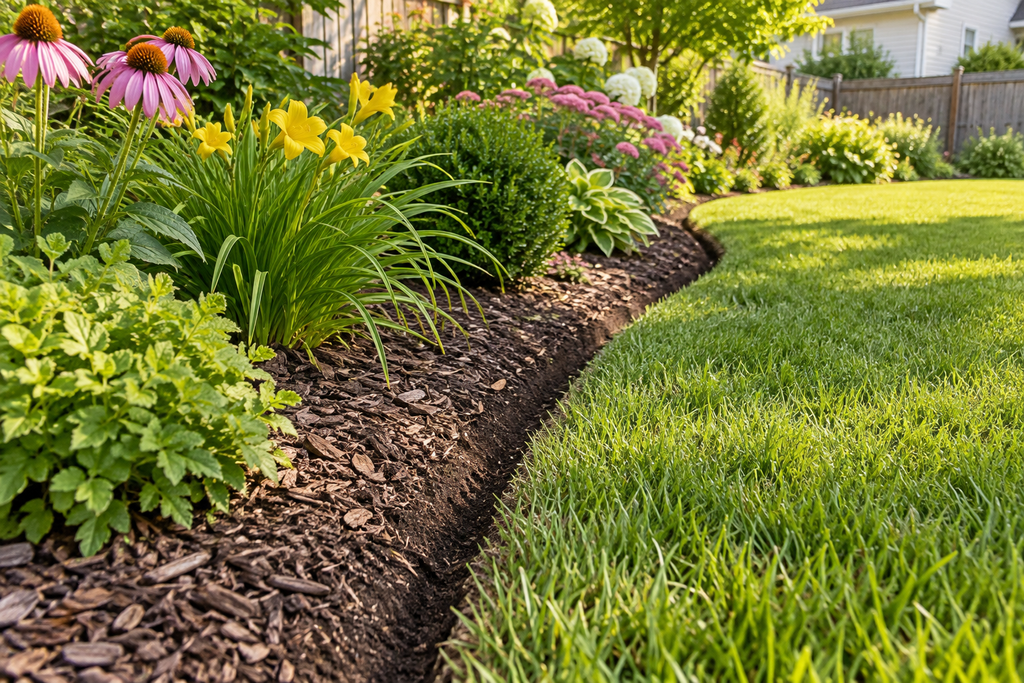
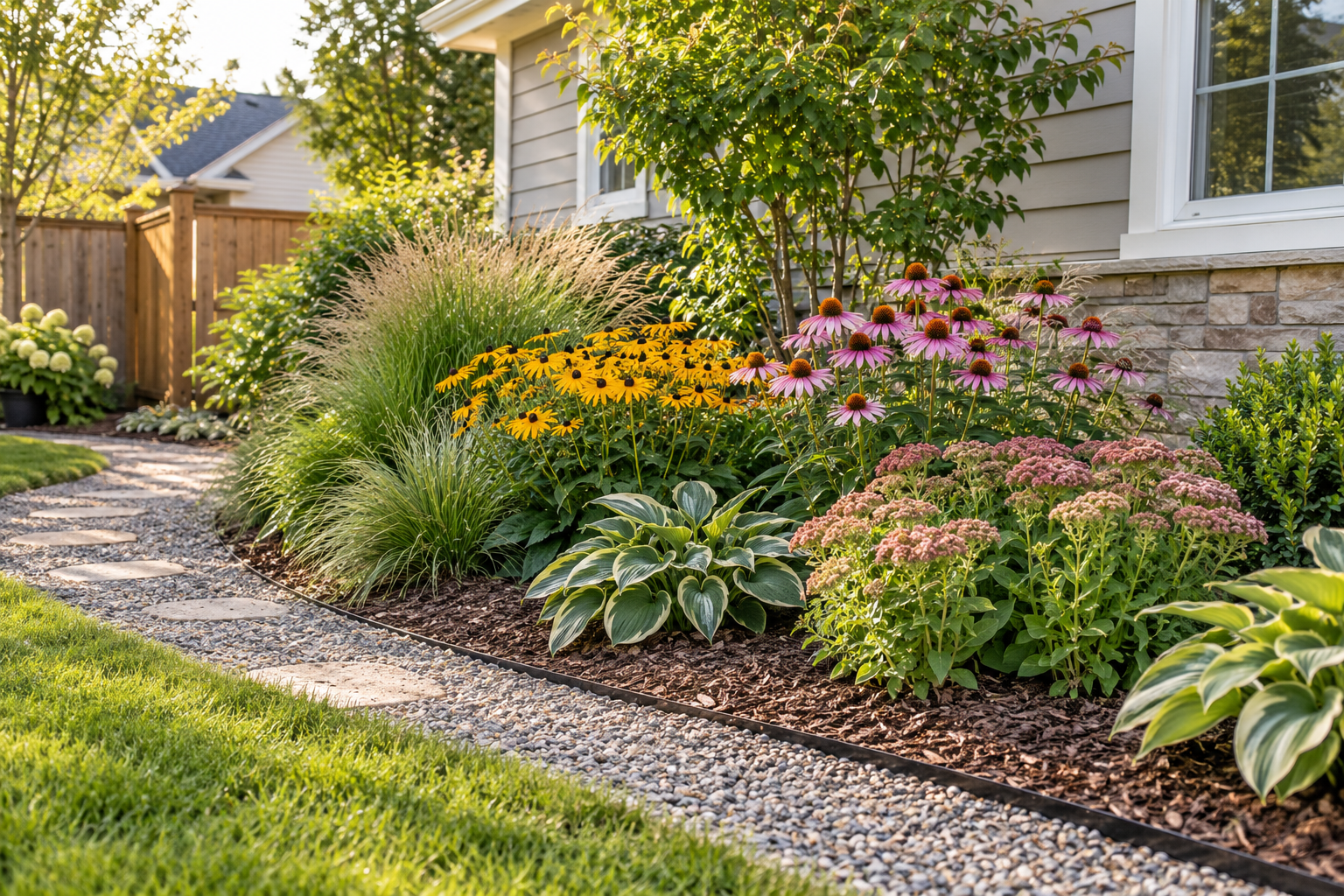
A clear line between the lawn and a planting bed makes the garden look tidy and helps you spot grass before it spreads into the bed. It also gives you a defined edge to follow when mowing.
For a low-cost option, use a spade to cut a shallow V-shaped trench along the bed. Remove the cut grass and soil, then keep mulch on the planting side. You can also install metal or stone edging if you prefer a physical border.
Check the edge during the growing season and remove grass that crosses it. A trenched edge needs occasional recutting, so plan for a little upkeep rather than expecting it to stay sharp on its own.
Common Low-Maintenance Garden Mistakes (and How to Avoid Them)
- Buying plants without checking their mature size. Read the label for each plant’s expected height and width. Give shrubs enough space so they will not need constant pruning later.
- Piling mulch against stems and tree trunks. Spread an even 2–4-inch layer over bare soil, but leave space around stems and trunks. This helps retain moisture and limit weeds without trapping moisture against the plants.
- Forgetting to water new plants. Even drought-tolerant plants need attention while their roots establish. Check the soil before watering and adjust to the weather.
- Ignoring sunlight. Observe which areas get morning sun, afternoon sun, or shade before choosing plants.
- Planting too densely. Allow room for each plant to reach its mature width. Crowded beds can mean more pruning and harder weeding.
- Expecting a garden to need no care at all. Plan for occasional weeding, watering during dry spells, and seasonal cleanup.
- Skipping local and pet safety checks. Check local guidance on invasive plants and, if pets use the garden, verify new plants in the ASPCA plant database.
A Simple Weekend Action Plan
You do not need to redesign your whole yard at once. Choose one small garden bed and use this plan to get started.
- Friday: Observe and plan. Pick the area, measure it, and note how much sun it gets. Check each plant’s mature size before deciding how many to buy.
- Saturday: Prepare and plant. Remove weeds and grass. Arrange the plants in their pots first to check the spacing, then plant and water them thoroughly.
- Sunday: Mulch and set a reminder. Add a 2–4-inch layer of mulch, leaving space around stems and tree trunks. Set a reminder to check the soil regularly while the new plants establish.
The time needed will depend on the size of the bed and the condition of the soil. A small, finished area gives you a practical starting point that you can expand later.
FAQ
What is the easiest plant for a low-maintenance garden?
There is no single easiest plant for every yard. Look for plants suited to your sunlight, soil, rainfall, and winter temperatures. If you live in the United States, the USDA Plant Hardiness Zone Map can help you check which perennial plants may survive winters in your area.
How can I start a low-maintenance garden on a budget?
Start with one small bed. Reuse healthy plants you already have, compare prices for smaller plants, and choose a simple layout you can maintain. Add more beds only when you know what works in your space.
Do low-maintenance gardens still need watering?
Yes. New plants need their soil checked regularly while they establish, and established plants may still need water during dry periods. Drip irrigation can deliver water near the roots and make watering more efficient. Source: EPA WaterSense.
Will ground cover stop all weeds?
No ground cover removes the need to weed completely. Clear existing weeds before planting, choose a ground cover suited to the site, and remove new weeds while it fills in. Check local guidance before planting a species that spreads quickly.
Are raised beds easier to maintain?
They can make planting and weeding more comfortable, especially if reaching ground level is difficult. However, they cost more to build and their soil may dry faster, so check moisture regularly.
How do I find native plants for my area?
Ask a local nursery or gardening extension service for plants suited to your soil and sunlight. You can also search by location using Audubon’s native plant database.
Conclusion: Start Small and Keep It Manageable
A low-maintenance garden starts with choices that fit your space. Pick one small area, choose plants suited to its sunlight and soil, and give new plants the care they need to establish.
You can add more over time. For now, one finished garden bed is a practical first step toward a yard you can enjoy without filling every weekend with chores.