12 Beautiful Kitchen Decor Ideas for a Warm and Stylish Space
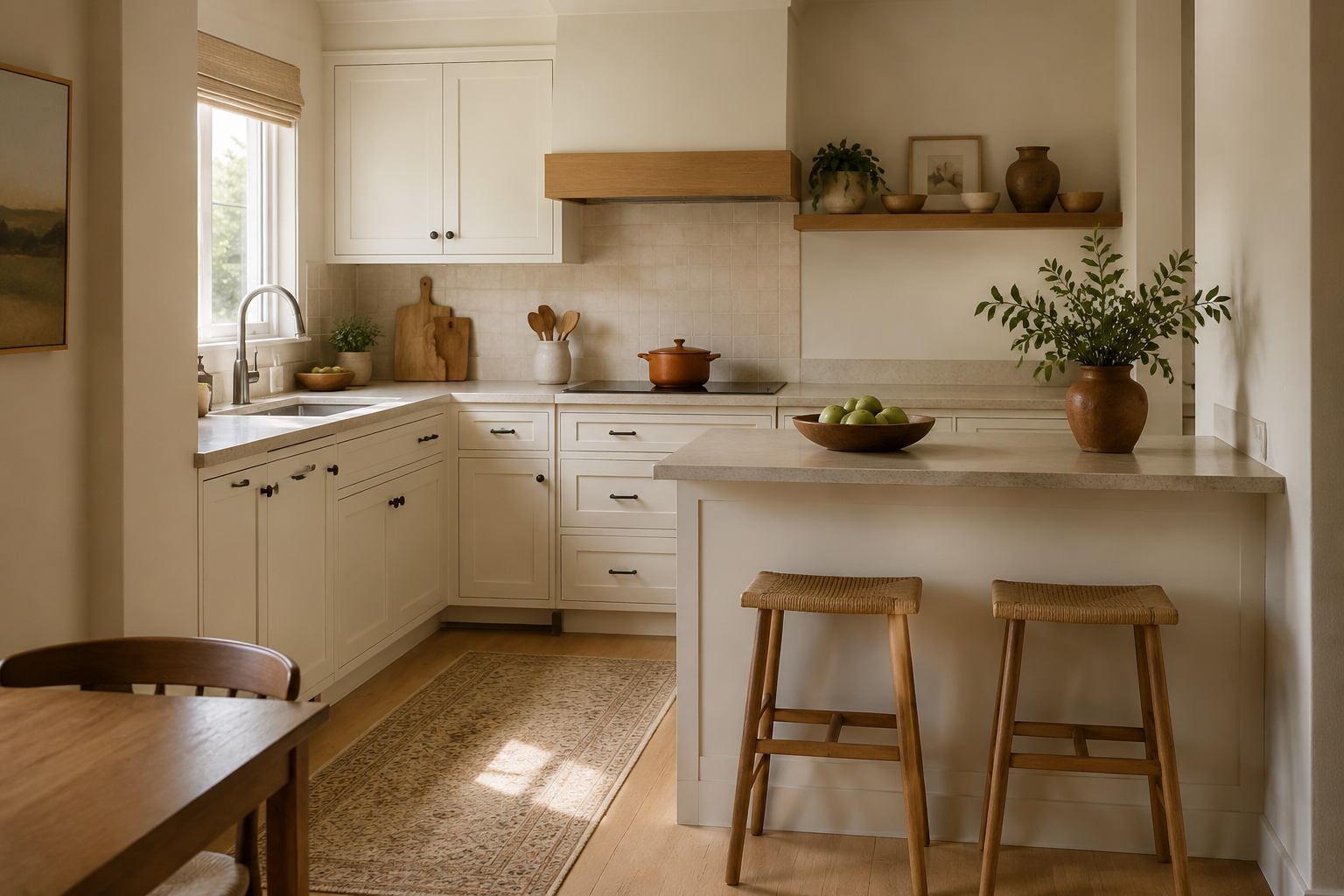
The kitchen is more than a place for preparing meals. It is often where family members gather, conversations happen, and daily routines begin. Thoughtful decorating can make this hardworking room feel more comfortable without affecting its practical function.
The best kitchen decor ideas combine style with organization. Simple changes such as introducing warm textures, improving lighting, displaying a few useful objects, or choosing a consistent color palette can noticeably refresh the space without requiring a complete renovation.
Before adding new decorations, consider the kitchen’s size, available counter space, natural light, and the items you use every day. This makes it easier to choose details that complement the room instead of creating unnecessary clutter.
In this guide, you will discover 12 practical ways to create a kitchen that feels warm, stylish, organized, and welcoming.
1. Start With a Warm and Cohesive Color Palette
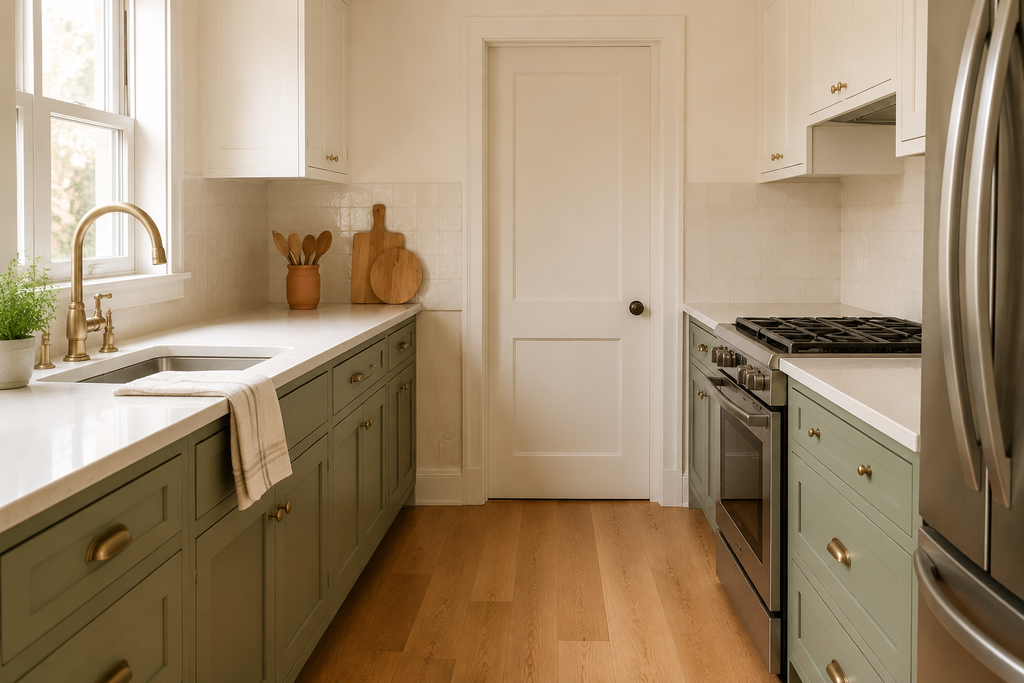
A consistent color palette helps the kitchen feel organized and welcoming. Begin with one main neutral shade, such as warm white, soft beige, or light gray, then introduce one or two accent colors through smaller decorative elements.
Natural tones like muted sage, terracotta, and warm wood work especially well because they add character without overwhelming the room. You can introduce these colors through dish towels, counter stools, ceramics, artwork, or a small plant.
Before buying new accessories, consider the existing cabinets, countertops, backsplash, and flooring. Select colors that complement these permanent surfaces rather than competing with them. This creates a balanced foundation and makes future kitchen decor ideas easier to coordinate.
2. Display Everyday Items on One Open Shelf
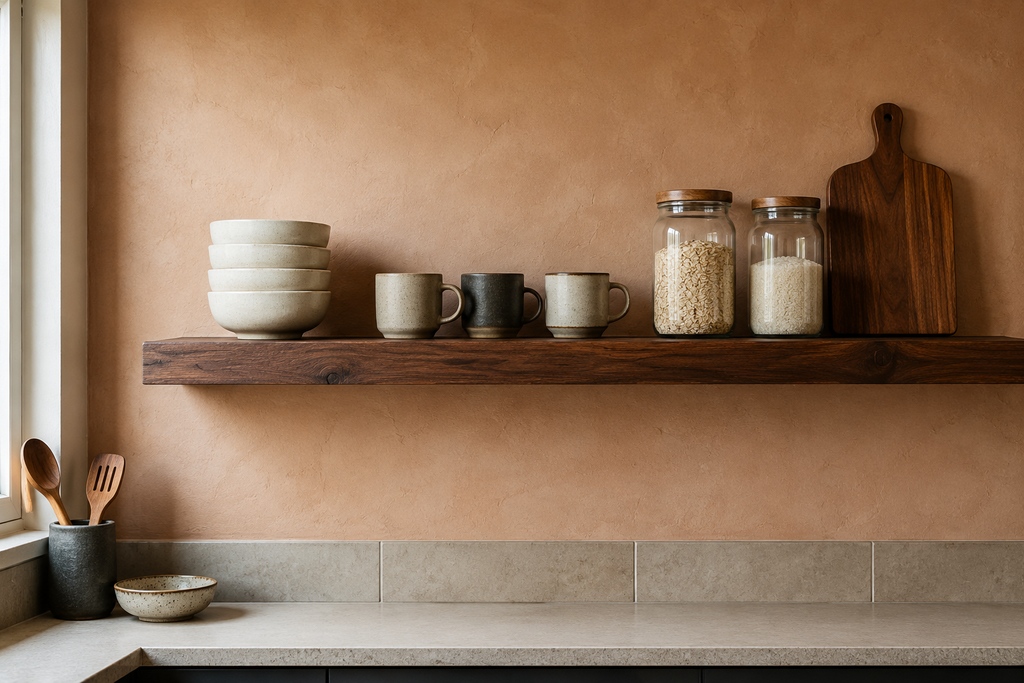
An open shelf can add warmth and personality to a kitchen while keeping frequently used items within easy reach. The key is to treat it as functional storage rather than filling it with decorations that collect dust or create visual clutter.
Choose a few coordinated pieces, such as everyday bowls, ceramic mugs, a small cutting board, or glass storage jars. Vary their heights slightly, but leave visible space between groups so the arrangement feels balanced and easy to maintain.
Avoid displaying too many colors, containers, or rarely used objects. One well-organized shelf usually creates more impact than several crowded shelves. Keep heavier items secure and place frequently used pieces where they can be reached comfortably.
3. Layer the Lighting for Warmth and Function
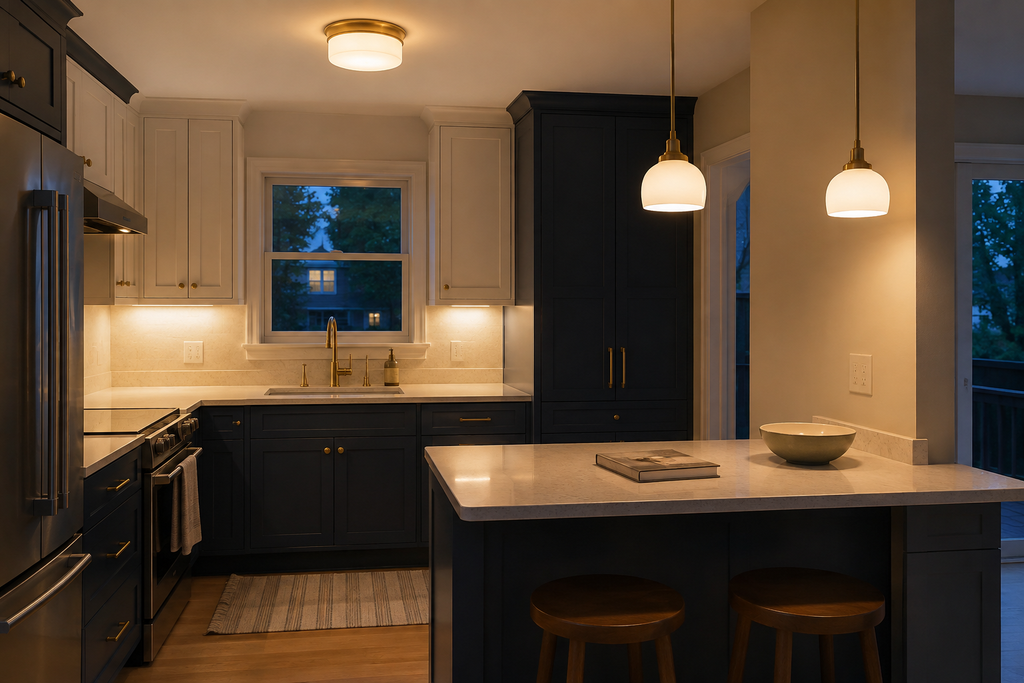
A well-lit kitchen needs more than one bright ceiling fixture. Combining ambient, task, and decorative lighting makes the room comfortable while providing enough visibility for cooking and cleaning.
Use under-cabinet lights to illuminate preparation areas, pendant lights above an island or peninsula, and a simple ceiling fixture for general brightness. Choose warm-white bulbs to create a welcoming atmosphere without making food preparation areas feel dim.
Keep the fixtures consistent in color or finish, and avoid installing more decorative lights than the room needs. Place task lighting where shadows normally fall, especially near the sink, stove, and main countertop.
For more information, read this ENERGY STAR guide to LED lighting.
4. Add a Washable Runner Rug
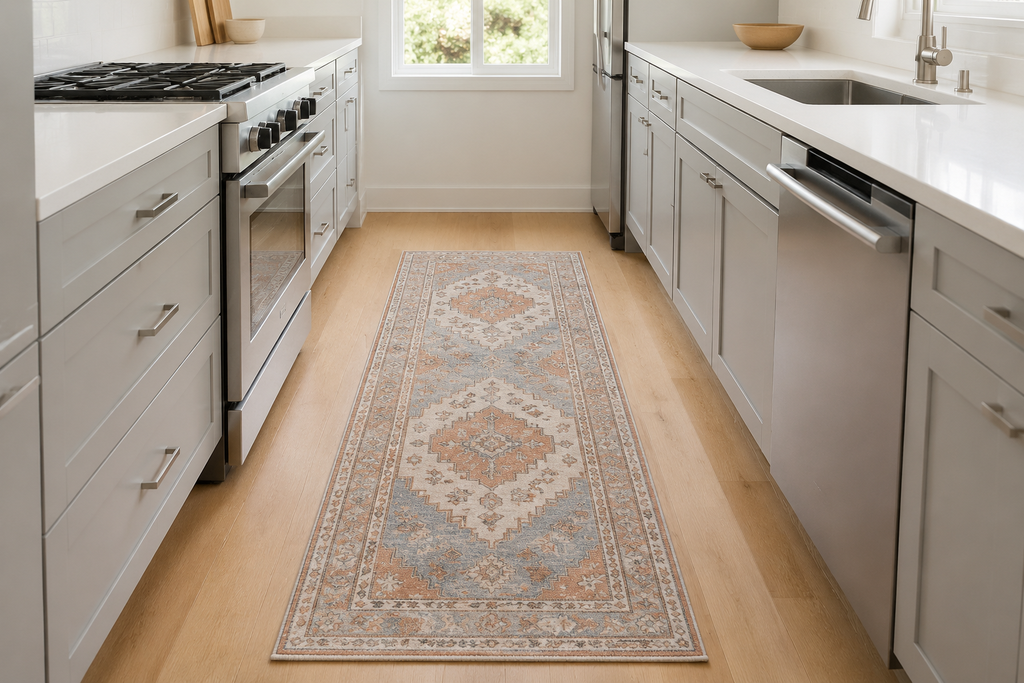
A runner rug can add warmth, color, and softness to a kitchen without taking up valuable storage space. It can also define a narrow working aisle and make hard flooring more comfortable underfoot.
Choose a low-profile, washable rug that fits the walkway without touching cabinet doors or appliances. A subtle pattern can hide minor marks, while colors inspired by the cabinets or backsplash help the rug blend naturally with the room.
Use a non-slip rug pad to keep it secure. Avoid thick rugs that trap crumbs, create a tripping hazard, or interfere with the oven and dishwasher doors.
5. Use a Peg Rail for Functional Wall Decor
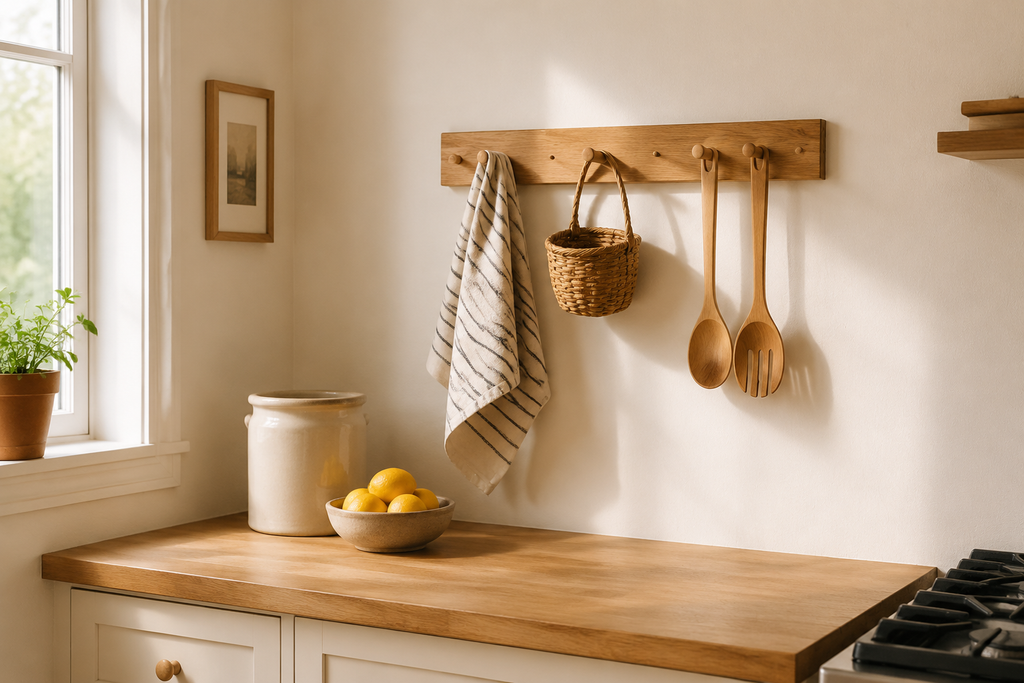
A wooden peg rail adds warmth and useful storage without occupying valuable counter space. Install it on an empty kitchen wall to display a few lightweight items that you use regularly.
Hang a linen towel, wooden utensils, or a small woven basket. Keep the arrangement simple and leave some hooks empty so the wall does not appear crowded.
Secure the rail properly and position it away from the stove, direct heat, and wet areas. This practical detail supports organization while complementing other warm kitchen decor ideas.
6. Add One Piece of Kitchen-Friendly Artwork
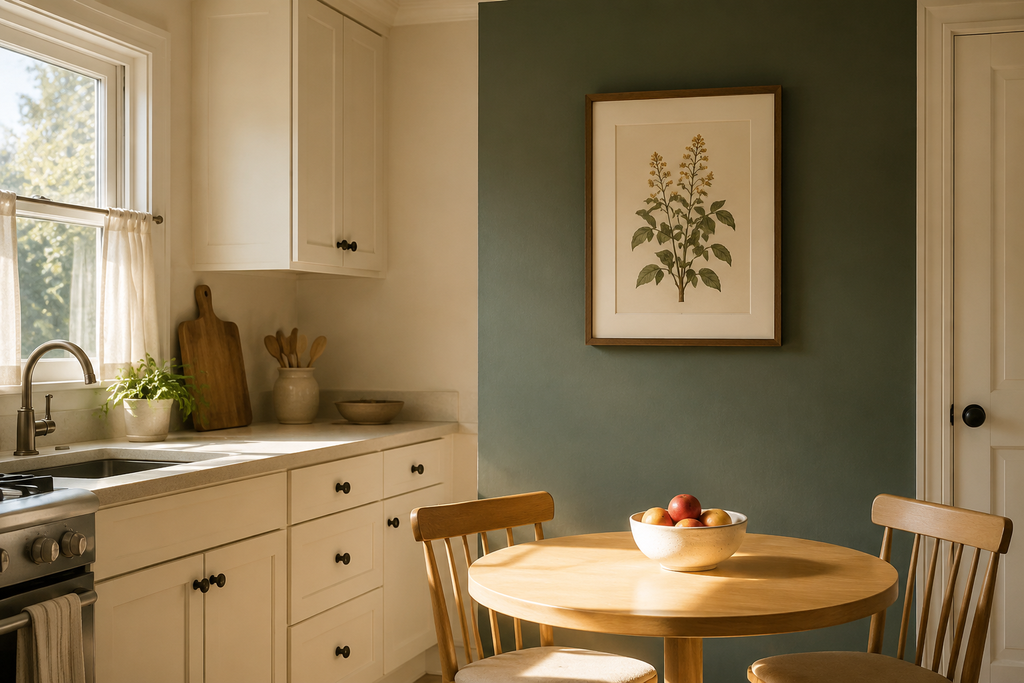
Artwork can introduce color and personality without occupying useful storage or preparation space. Choose one piece that complements the kitchen’s existing colors and overall style.
A botanical print, simple landscape, or subtle abstract design can work well. Place it on an empty wall near a breakfast table or doorway, away from cooking heat and water splashes.
Use a frame that coordinates with nearby wood or metal finishes. One carefully positioned picture often creates a cleaner and more intentional result than a crowded gallery wall.
7. Create a Small Indoor Herb Corner
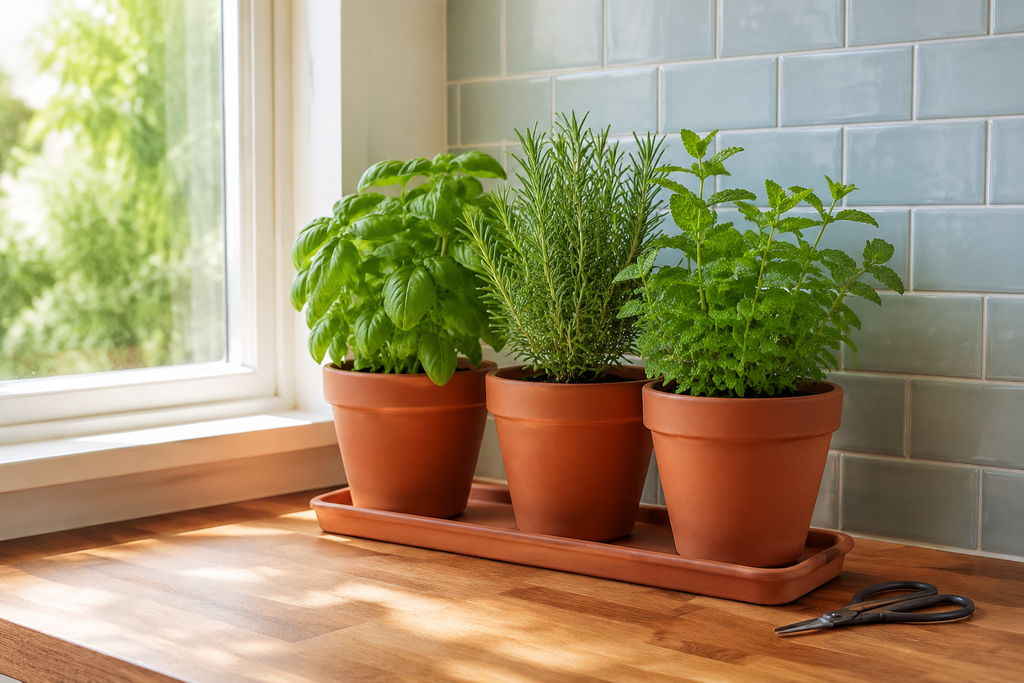
Fresh herbs add natural color and texture while remaining useful for everyday cooking. Place two or three small pots near a bright kitchen window where they can receive suitable natural light.
Choose herbs you regularly use, such as basil, rosemary, or mint. Keep the pots coordinated and place them on a waterproof tray to protect the countertop from moisture and soil.
Avoid spreading plants across the entire kitchen. One tidy herb corner creates a stronger decorative effect while preserving enough workspace for food preparation.
8. Organize Everyday Essentials on a Decorative Tray
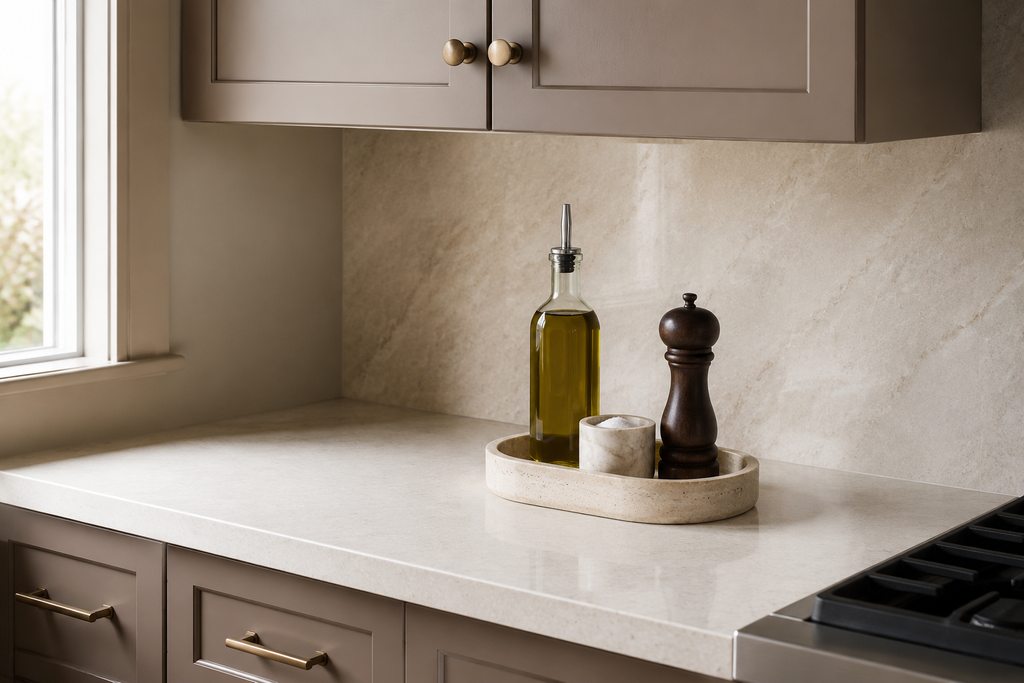
A small tray can make frequently used items look intentional while helping the countertop remain organized. Place it near the cooking area without blocking your main preparation space.
Group only a few useful objects, such as an olive-oil bottle, salt cellar, and pepper mill. Choose a tray made from wood, ceramic, or natural stone to introduce texture and complement the kitchen’s finishes.
Avoid filling the tray with items you rarely use. A simple arrangement is easier to clean and supports practical kitchen decor ideas without creating clutter.
9. Soften the Window With a Café Curtain
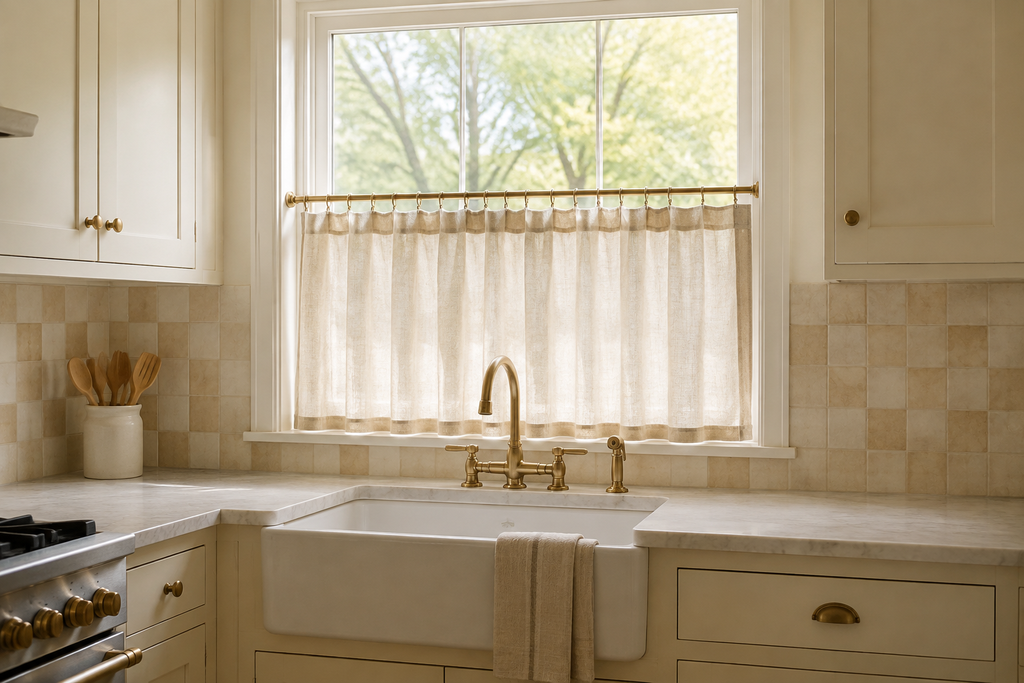
A café curtain can add softness, texture, and privacy while allowing natural light to enter through the upper part of the window. It works especially well above a kitchen sink or in a small breakfast area.
Choose a lightweight, washable fabric in a neutral color or subtle pattern. Measure the window carefully so the curtain hangs neatly without covering more glass than necessary.
Keep the fabric away from the stove and other heat sources. This simple detail makes the kitchen feel more comfortable without adding objects to the countertop.
10. Refresh the Cabinets With Coordinated Hardware
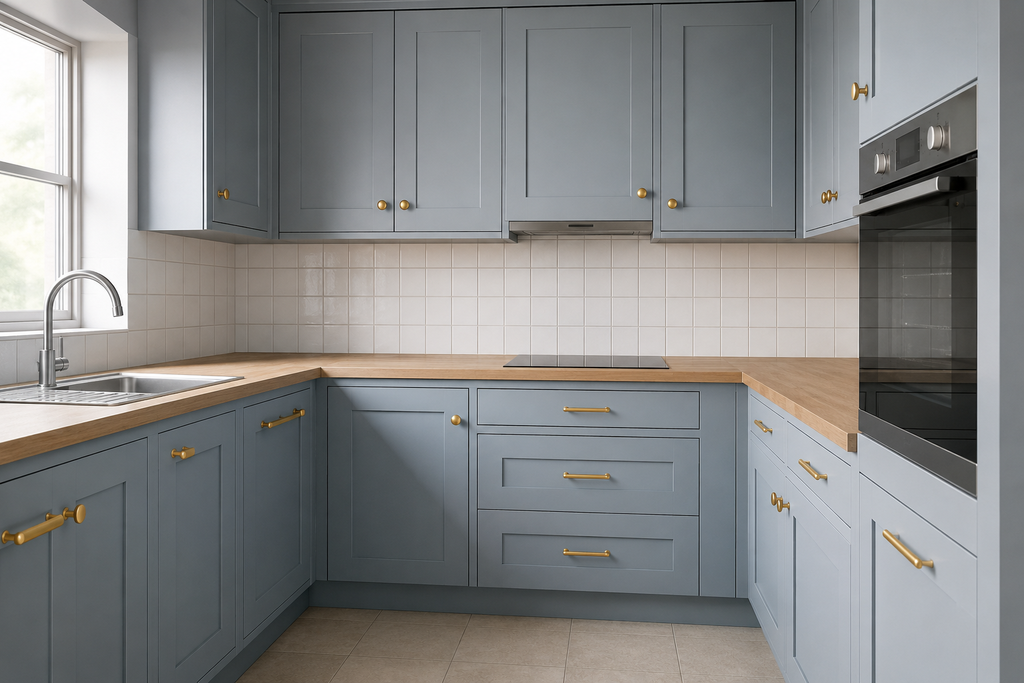
Replacing outdated knobs and handles can give kitchen cabinets a cleaner appearance without requiring a major renovation. Select one finish that complements the faucets, lighting, and other permanent details.
Use knobs on cabinet doors and practical pulls on drawers. Keep their size and placement consistent to create an organized and intentional result.
Before purchasing new hardware, measure the distance between the existing screw holes. Choosing compatible pieces makes installation easier and prevents unnecessary damage to the cabinets.
11. Turn an Empty Corner Into a Breakfast Nook
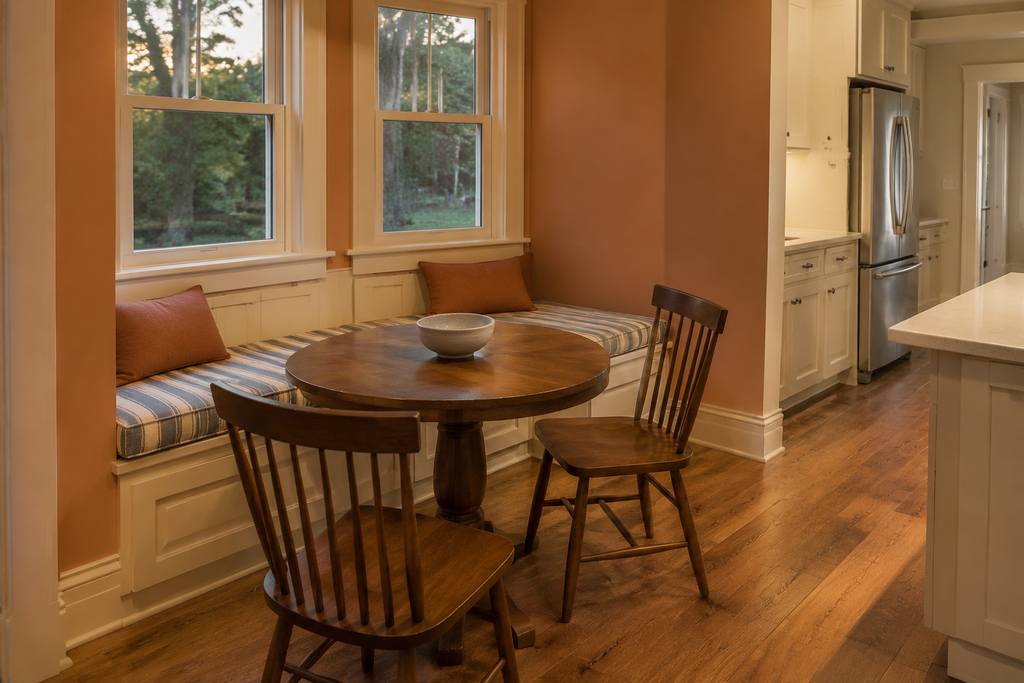
A small breakfast nook can transform an unused kitchen corner into a comfortable place for meals, coffee, or conversation. Choose furniture that fits the available space without blocking the main walkway.
Combine a compact round table with simple chairs or a built-in bench. Add one washable cushion and a few coordinated pillows to introduce color and softness.
Keep the tabletop mostly clear so the area remains practical for daily use. This thoughtful arrangement adds function and creates a warmer, more welcoming kitchen.
12. Store Dry Goods in Coordinated Glass Jars
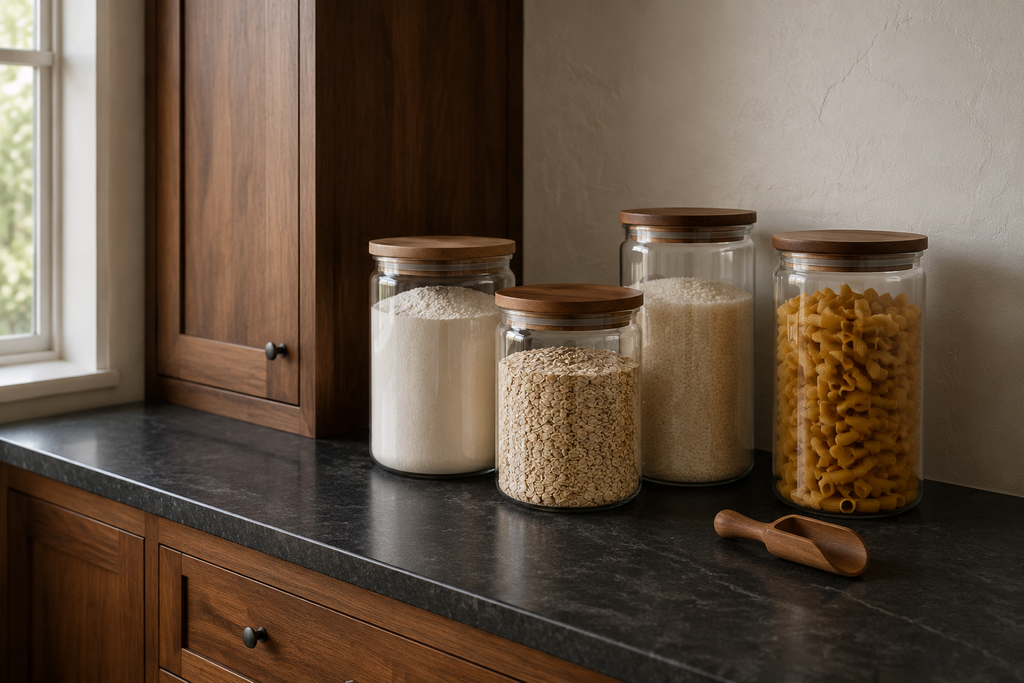
Clear storage jars can keep frequently used dry ingredients organized while adding natural texture to the kitchen. Choose airtight containers in practical sizes for foods such as flour, oats, rice, or pasta.
Group three or four jars together on a pantry counter or inside a glass-front cabinet. Using matching lids helps the arrangement feel consistent, while the visible ingredients introduce subtle color.
Keep the containers clean and avoid displaying more items than the space can comfortably hold. Store them away from direct heat and strong sunlight to help protect the food inside.
Final Thoughts
Creating a warm and stylish kitchen does not always require expensive renovations. Small, thoughtful changes can improve the room’s appearance while making it more comfortable and practical for everyday life.
The most effective kitchen decor ideas combine beauty with function. Start with one or two updates that suit your space, such as improving the lighting, organizing the countertop, adding a washable runner, or creating a useful breakfast corner.
Keep the layout clear, choose materials that are easy to maintain, and avoid adding decorations that interfere with cooking or cleaning. With a consistent color palette and carefully selected details, your kitchen can feel organized, welcoming, and personal.
For more inspiration, explore our cozy living room ideas for a warm and inviting home.
Frequently Asked Questions
How can I decorate my kitchen on a small budget?
Begin with affordable changes such as replacing dish towels, organizing everyday items on a tray, adding artwork, or introducing a washable runner. Reusing existing objects in a more organized arrangement can also refresh the room without significant expense.
How can I make my kitchen feel warmer?
Use warm-white lighting, natural wood, soft textiles, and colors such as cream, muted terracotta, or sage green. These kitchen decor ideas add warmth without affecting the room’s practical function.
What should I display on kitchen countertops?
Display only a few items that you use regularly, such as cooking oil, a fruit bowl, or frequently used utensils. Keeping most of the countertop clear makes cleaning and food preparation easier.
How do I decorate a small kitchen without creating clutter?
Use wall-mounted storage, compact accessories, and one consistent color palette. Choose decorative elements that also serve a useful purpose, and avoid covering every wall or work surface.
How many colors should I use in my kitchen decor?
Begin with one main neutral color and introduce one or two complementary accent colors. Repeating these shades through textiles, artwork, and small accessories helps the room feel balanced and coordinated.